
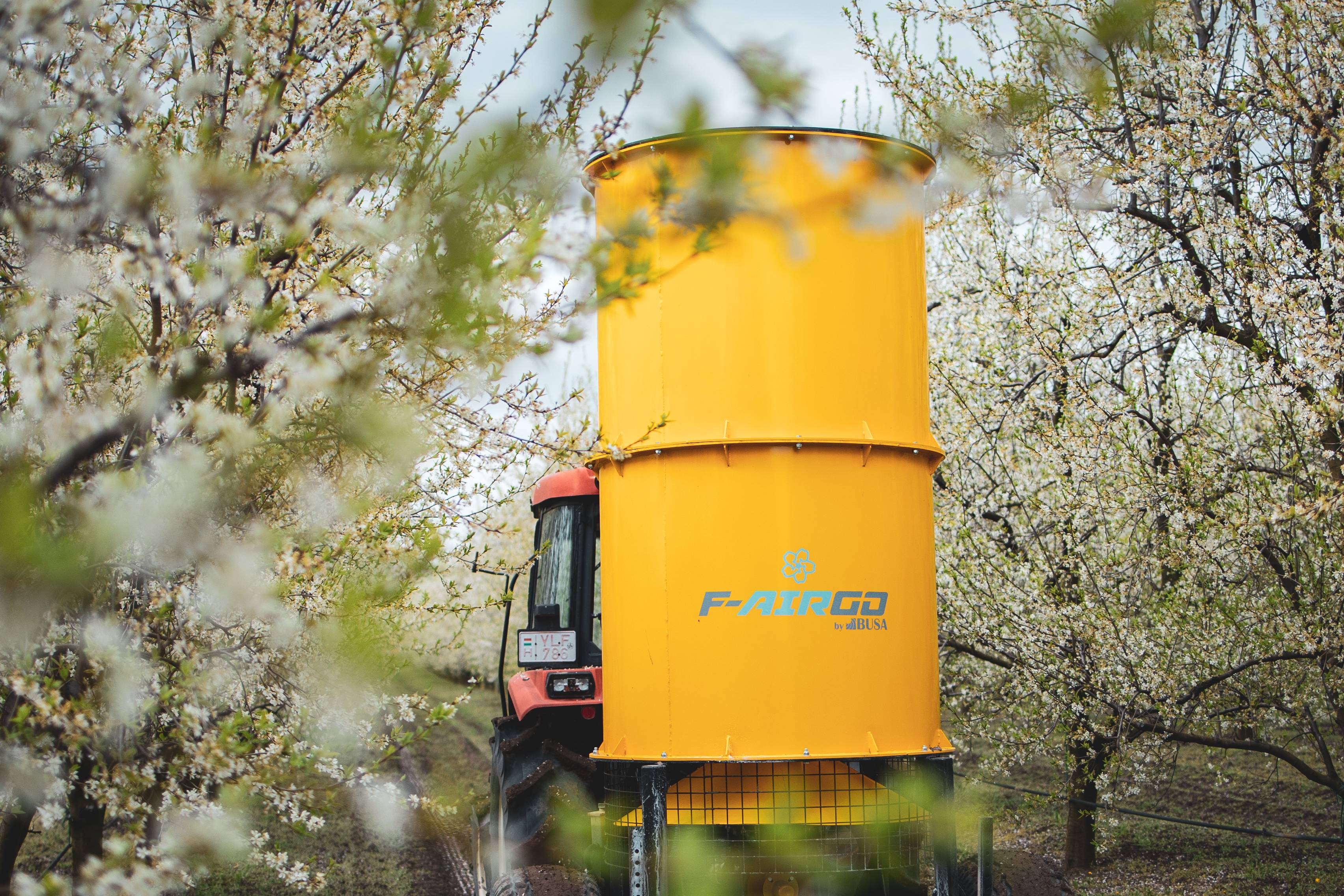
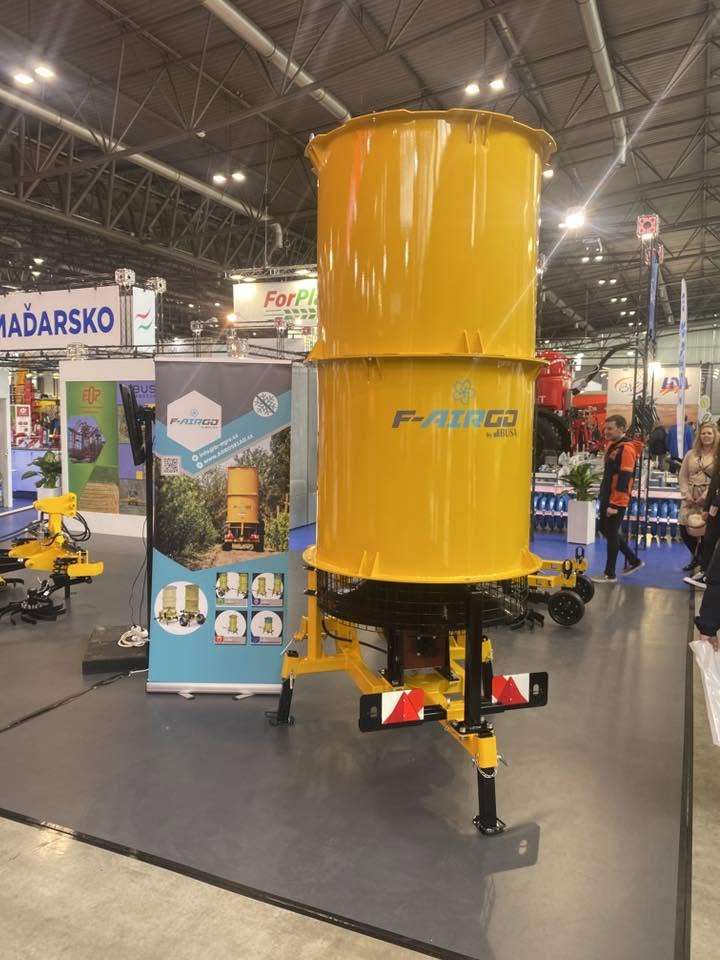
F-AirGo Mobile Frost Protection Air Mixer
The warm air is already up there. F-AirGo brings it down to your plants.
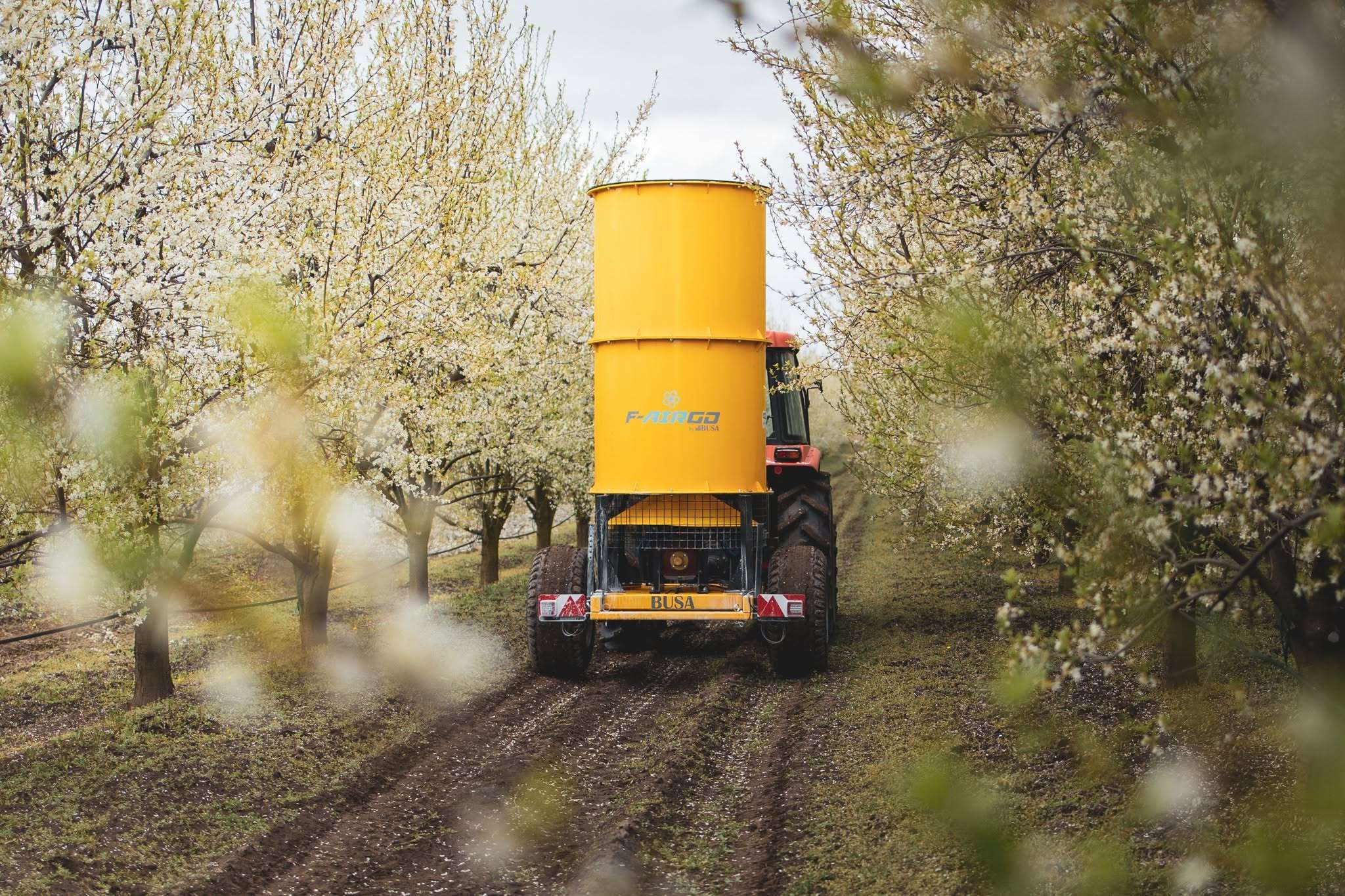
During radiation frost, cold air collects near the ground, with a layer several degrees warmer above it. The F-AirGo draws down this warmer air and blows it into the crop as it moves along the rows.
Mobile frost protection, for a recommended 3.5–4.0 hectares of net area per machine.
F-AirGo Mobile Frost Protection Air Mixer
The Problem
Blossoms, freshly set fruitlets, and young shoots can be severely damaged by just a few degrees of frost.
1 frosty night can affect:
Crop quantity
Fruit quality
Next year's fruit buds
Plantation profitability
Annual revenue
How Does F-AirGo Work?
1. Draws Air from Higher Up
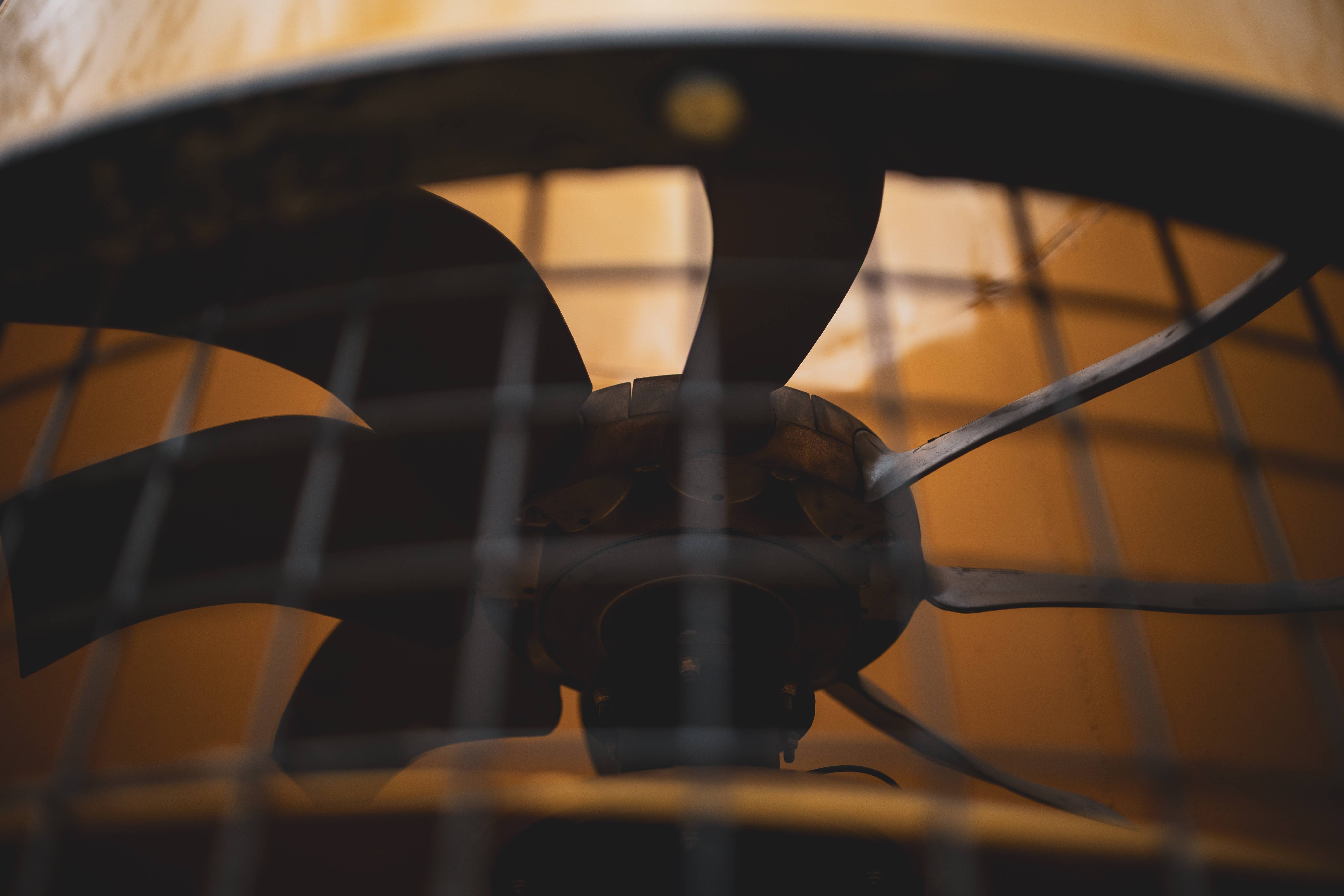
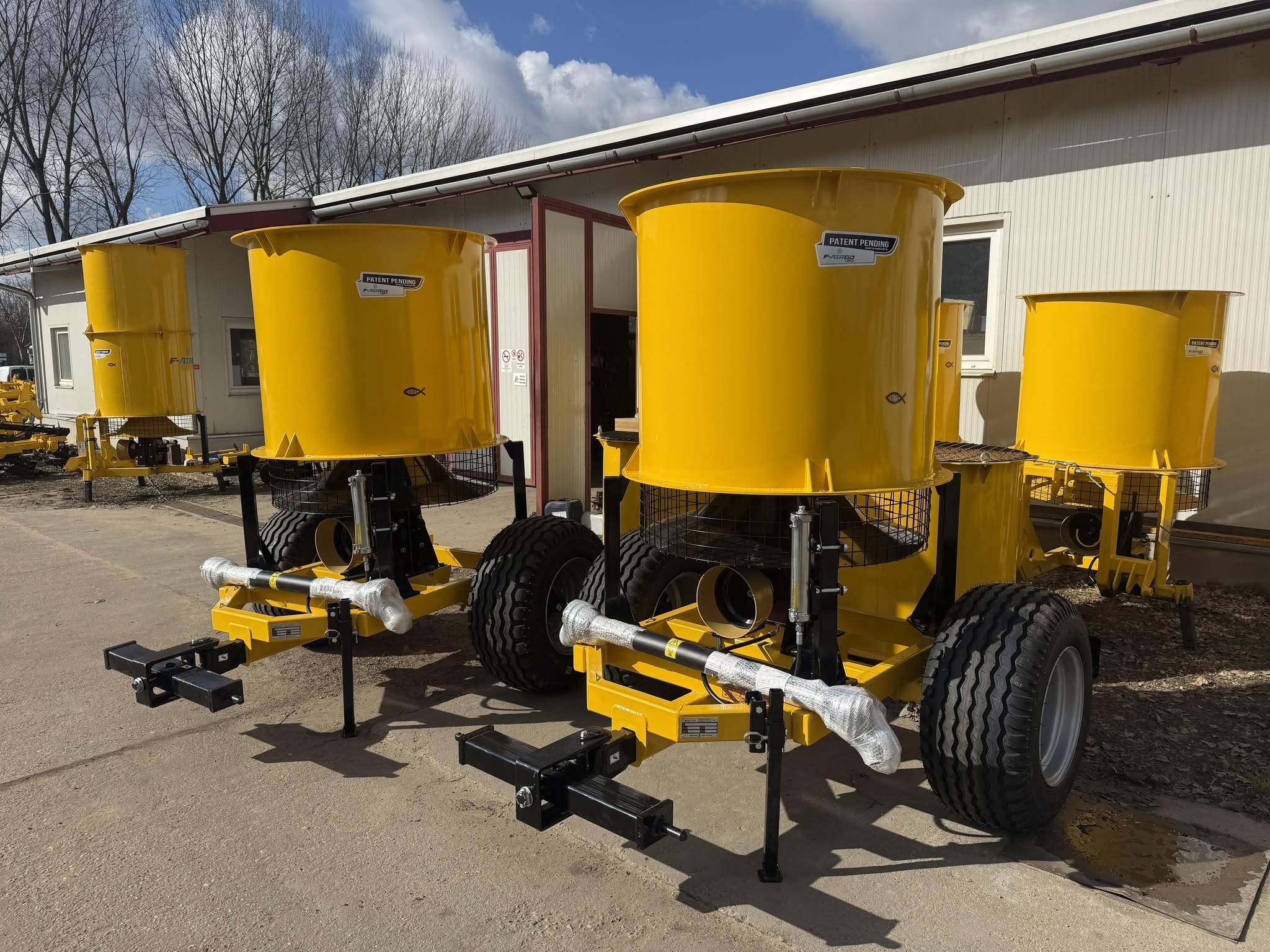
The large-diameter, vertical intake duct draws air from the higher air layer to the fan.
In radiation frost conditions, the air higher up is several degrees warmer than the cold air trapped near the ground.
2. Spreads It at High Speed
The axial fan moves 90,000 m³ of air per hour through the outlet cross-section.
Outlet air speed: 125–132 km/h, so the airflow penetrates between the rows of the plantation and dislodges the supercooled air clinging to the surfaces of the plant parts.
3. Protects the Area While Moving
F-AirGo doesn't stay in one place. It moves continuously through the plantation with the tractor, delivering the airflow again and again to the entire area that needs protection.
The recommended working speed is 7–11 km/h. Working width: 15–30 m.
4. Prevents Cold Air from Settling
The regularly returning airflow mixes the cold air near the ground with the warmer air found higher up.
The aim is not to warm the entire air mass of the plantation, but to eliminate the dangerous temperature stratification.
Why a Mobile System?
The installed frost protection fan works from a fixed point. The F-AirGo, in contrast:
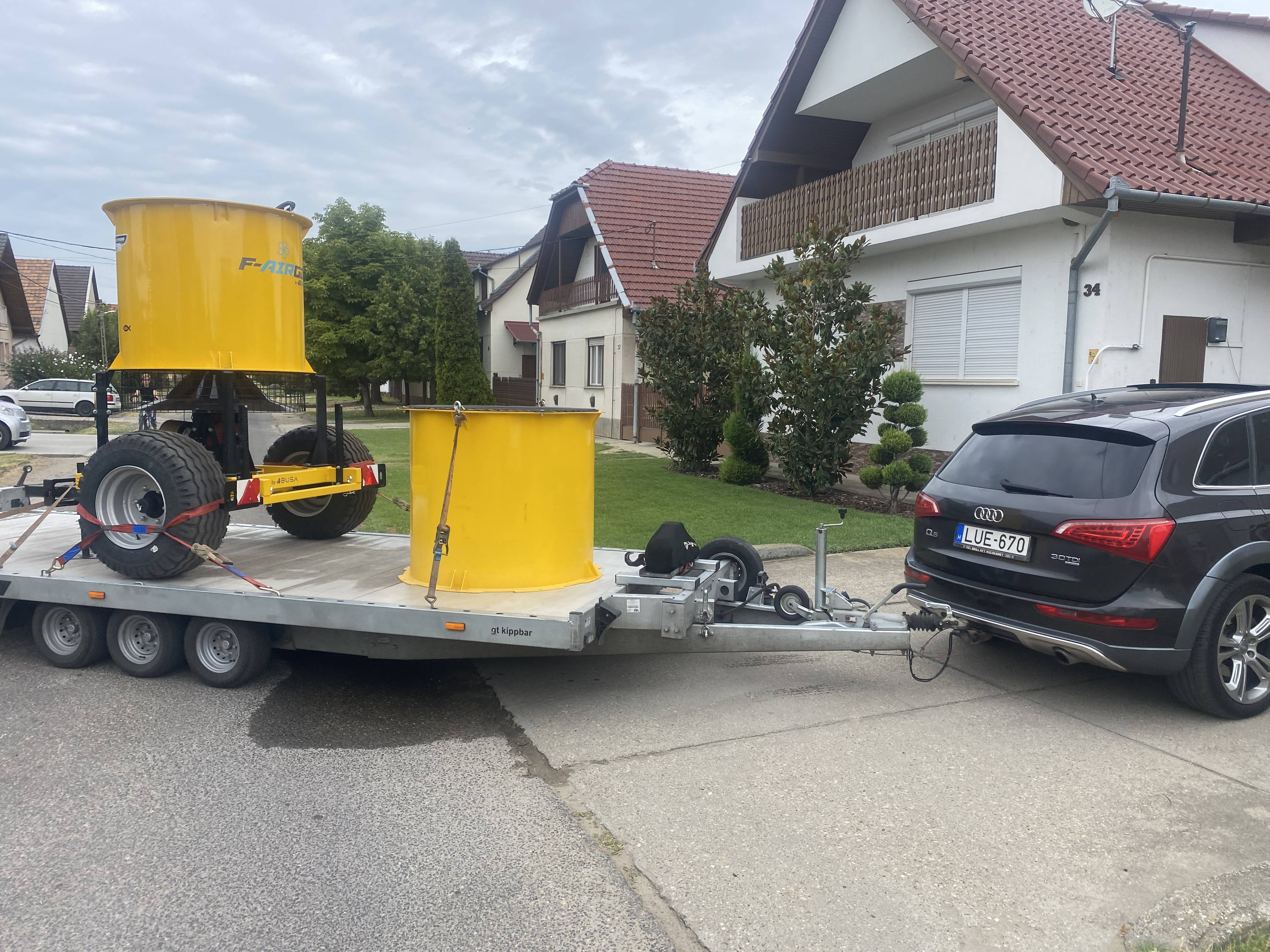
- can be taken wherever it is needed
- can be used in multiple plantations
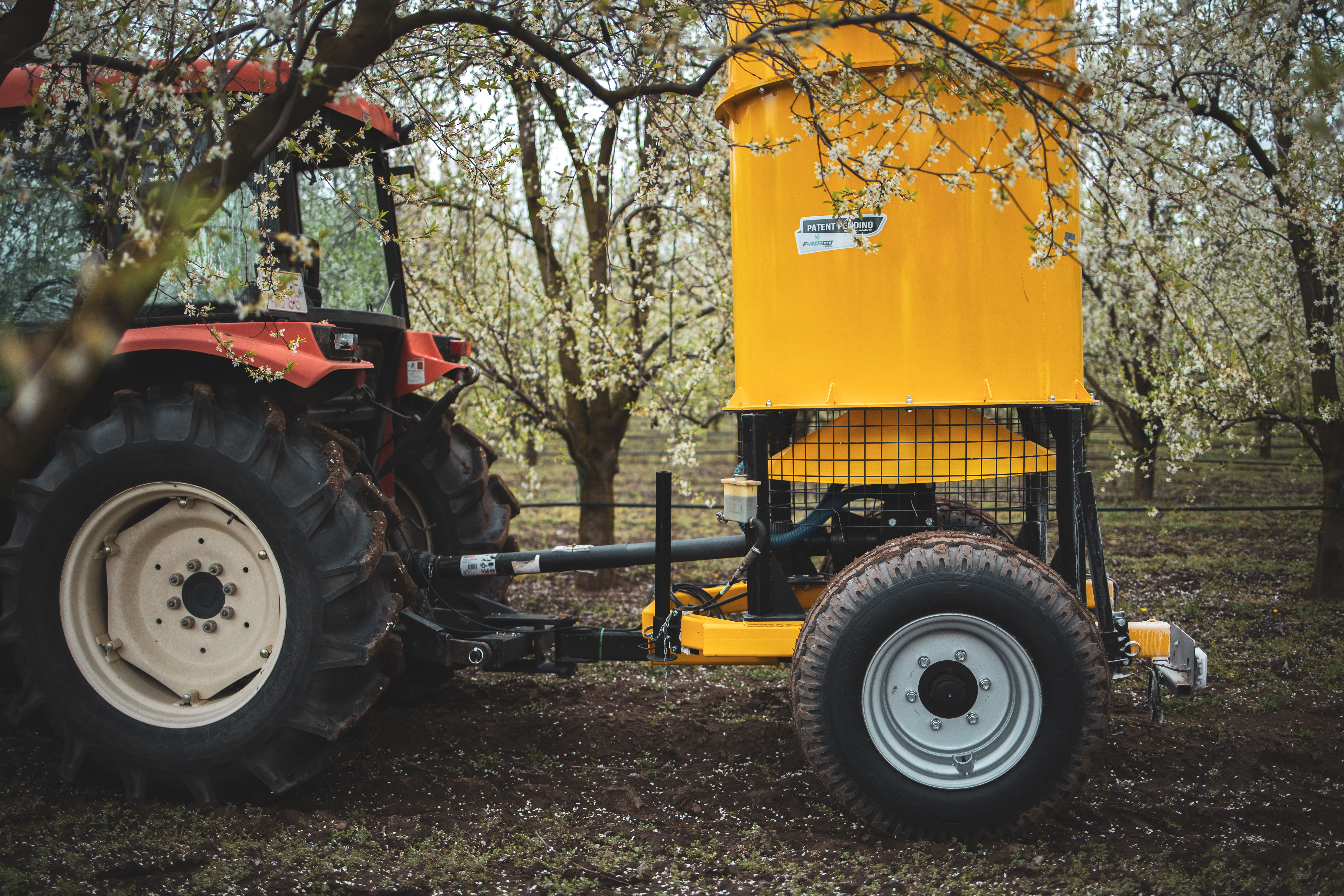
- does not require a permanent concrete foundation or an electrical grid
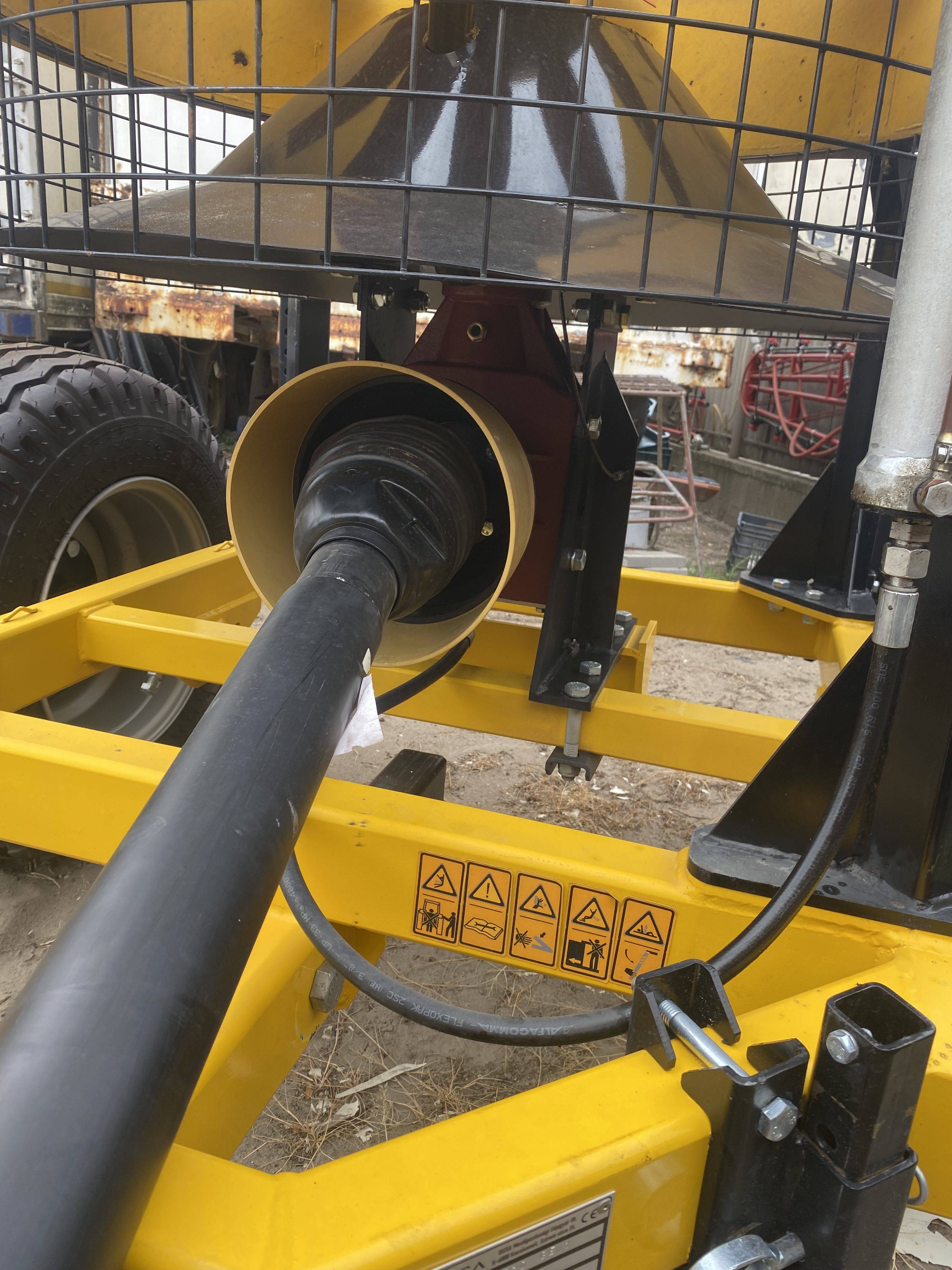
- can be operated with the farm's existing tractor
- travelling continuously, it follows the layout of the given plantation.
- performs uniform work across the entire area.

It doesn't burn gas. It uses the available air.
No gas burner or large number of paraffin candles are needed – the machine moves and mixes the plantation's air using the tractor's power.
The F-AirGo JET keeps the tractor’s waste heat in the crop zone. By our calculations this is 3.6–4.3 GJ – equivalent to the heat of combustion of 240–290 kg of net firewood. Producing the same amount of heat by ground-level burning would require far more fuel. This typically means simpler logistics and faster deployment; however, night-time protection requires continuous tractor driving.
How does it compare with other solutions?
| Fixed fan | Burning (gas burner, candles) | F-AirGo | |
|---|---|---|---|
| Operating principle | Works from a single fixed point | Generates heat by burning | Mixes the higher, warmer air with the cold air near the ground while moving |
| Placement | Stationary | Burners and candles placed in the plantation | Can be taken wherever it is needed |
| Infrastructure | Requires a permanent foundation and, in some cases, an electrical grid connection | Purchasing and storing fuel and burners | Runs on the farm’s existing tractor |
| Across several plantations | Tied to one installation site | Must be set up again in each plantation | Can be used in several plantations |
| Installation, setup | Requires installation and setup | Placing and preparing burners and candles | No setup needed: it connects to your existing tractor |
| Night-time operation | Works from a fixed spot; no driving required | Lighting, supervising and refilling the burners | Requires continuous tractor driving: the machine covers the area by moving between the rows |
General characterisation; the actual design and performance of individual systems may differ.
Knowledge Base: The Fundamentals of Successful Protection
When Is It Effective?
F-AirGo is primarily effective against radiation frost that forms on clear, calm nights, when cold air collects near the ground while a warmer layer sits higher up.
Don't Start It After the Plantation Has Already Frozen
Starting early – typically already between +2 and +4 °C – is far more effective than trying to stop a frost that has already set in. Recommended start: 19:30.
How Large an Area Can It Protect?
The recommended 3.5–4 hectares is just a starting point – the actual area that can be protected also depends on the shape of the plantation, the direction of the rows, and the terrain.
Which Crops Can It Be Used With?
From grapevines through apples, apricots and peaches to blueberries and strawberries – it can be used in any frost-sensitive row plantation.
What Tractor Is Needed for It?
At least 50–70 kW of power and a 540 rpm PTO are recommended – but terrain conditions and row spacing should also be taken into account.
How Do We Plan the Route?
The right route is just as important as the machine itself – we determine which rows to drive and in what order.
The Conditions for Successful Protection
From temperature measurement through a steady PTO speed to a well-practiced nighttime route – we've gathered what's worth paying attention to.
Is it suitable for my plantation?
- Clear, calm-night (radiation) frost is the typical risk in your area.
- It is a row plantation.
- A tractor of at least 50–70 kW with a 540 rpm PTO is available.
- The area to be protected is 3.5–4.0 hectares net per machine.
- Where hail nets are used, the height of the net system allows use of the machine.
- There is a thermometer and a predefined starting point (typically between +2 and +4 °C).
- The night-time route is planned in advance.
If you answer yes to most of these, it is worth requesting a quote; if you are unsure about a point, we will help with the assessment. Request a Quote →
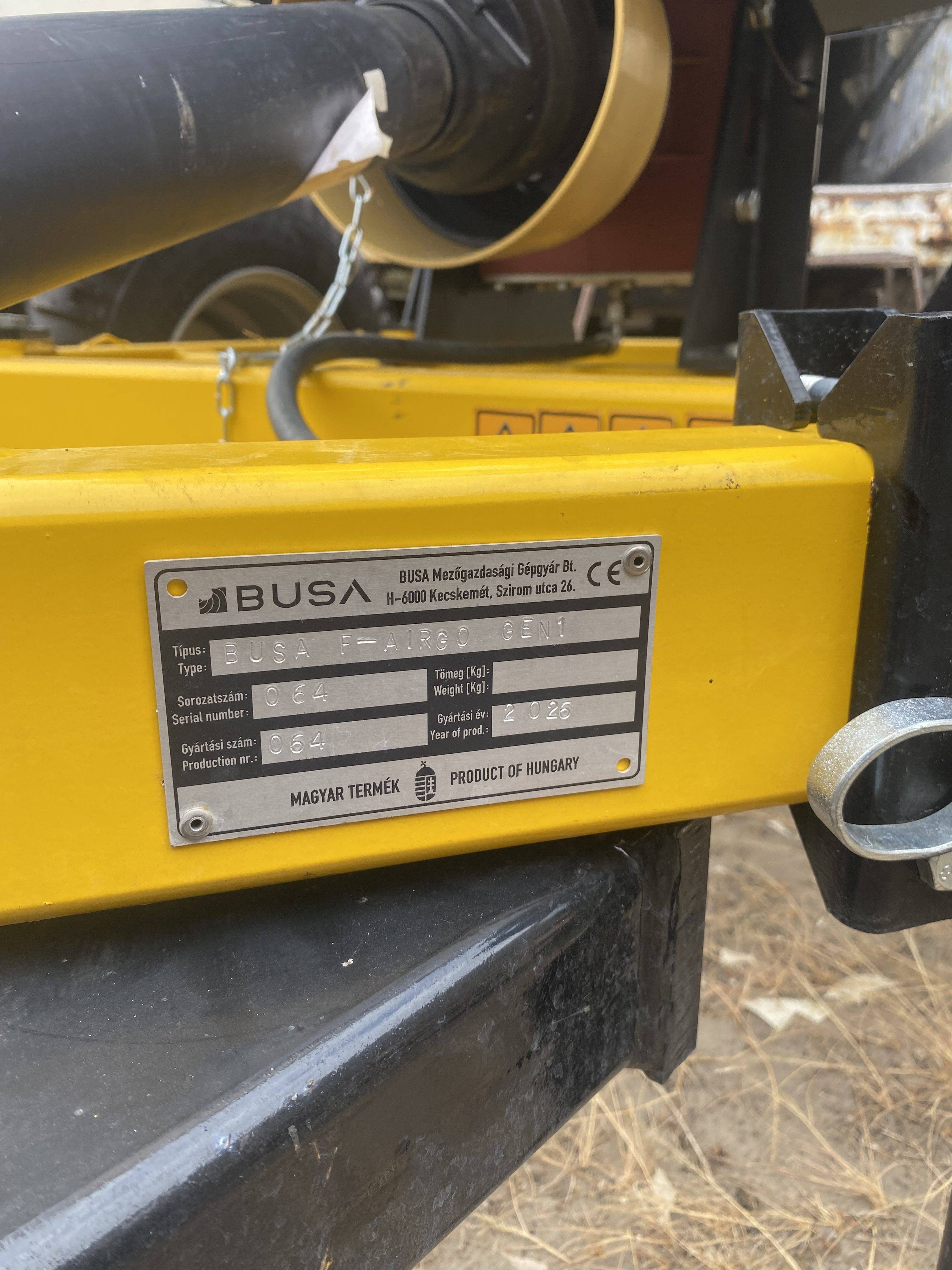
Hungarian Development, Based on Practical Plantation Experience
During the development of the F-AirGo, we took into account not only technical calculations but also experience gained in real plantations. The focus of development was that the machine should be mobile, work with the farm's existing tractor, and be quick to deploy. It was also an important consideration that it should be usable in several crops and remain easy to handle, while being able to move a large volume of air during the critical frosty hours, and to homogenise it.
Machine Types

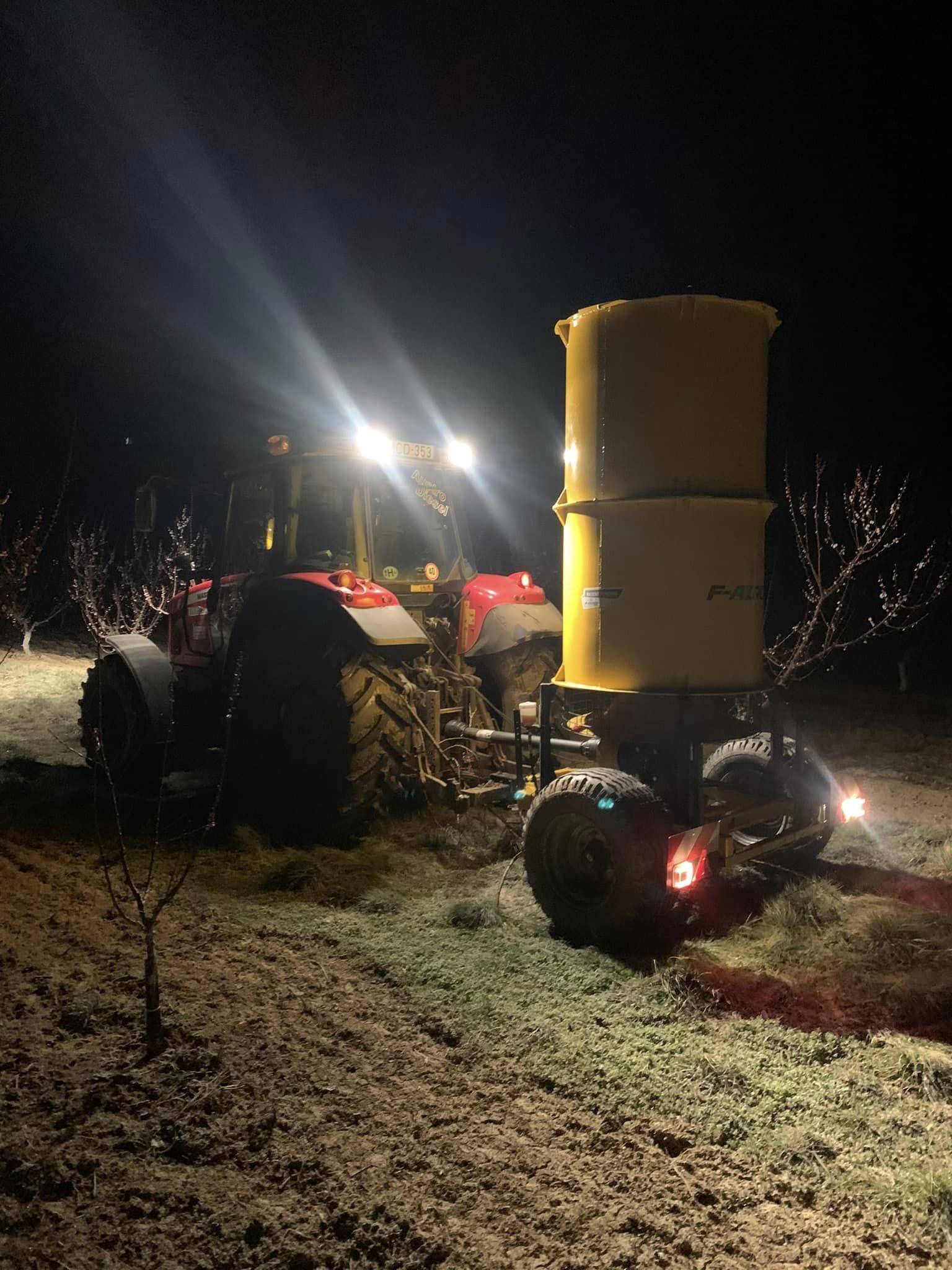
F-AirGo Fruit
A version designed for fruit orchards.
It can be used in, among others, apple, pear, cherry, sour cherry, apricot, peach, plum, and walnut orchards.

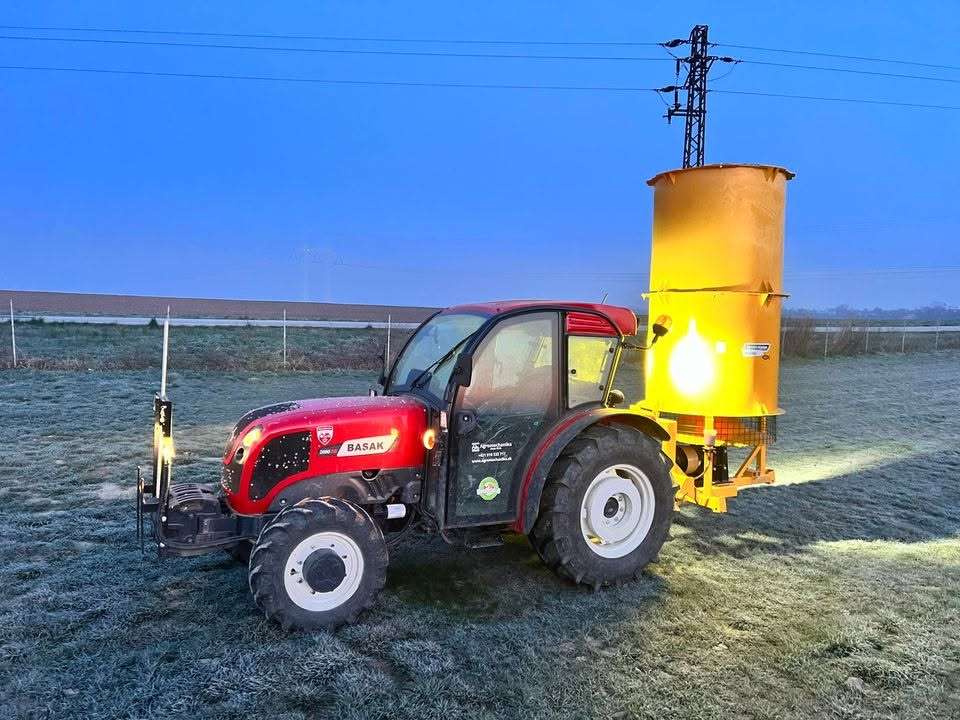
F-AirGo Vitis
A version designed for vineyards.
A design that can be adapted to narrower rows and viticultural training systems.

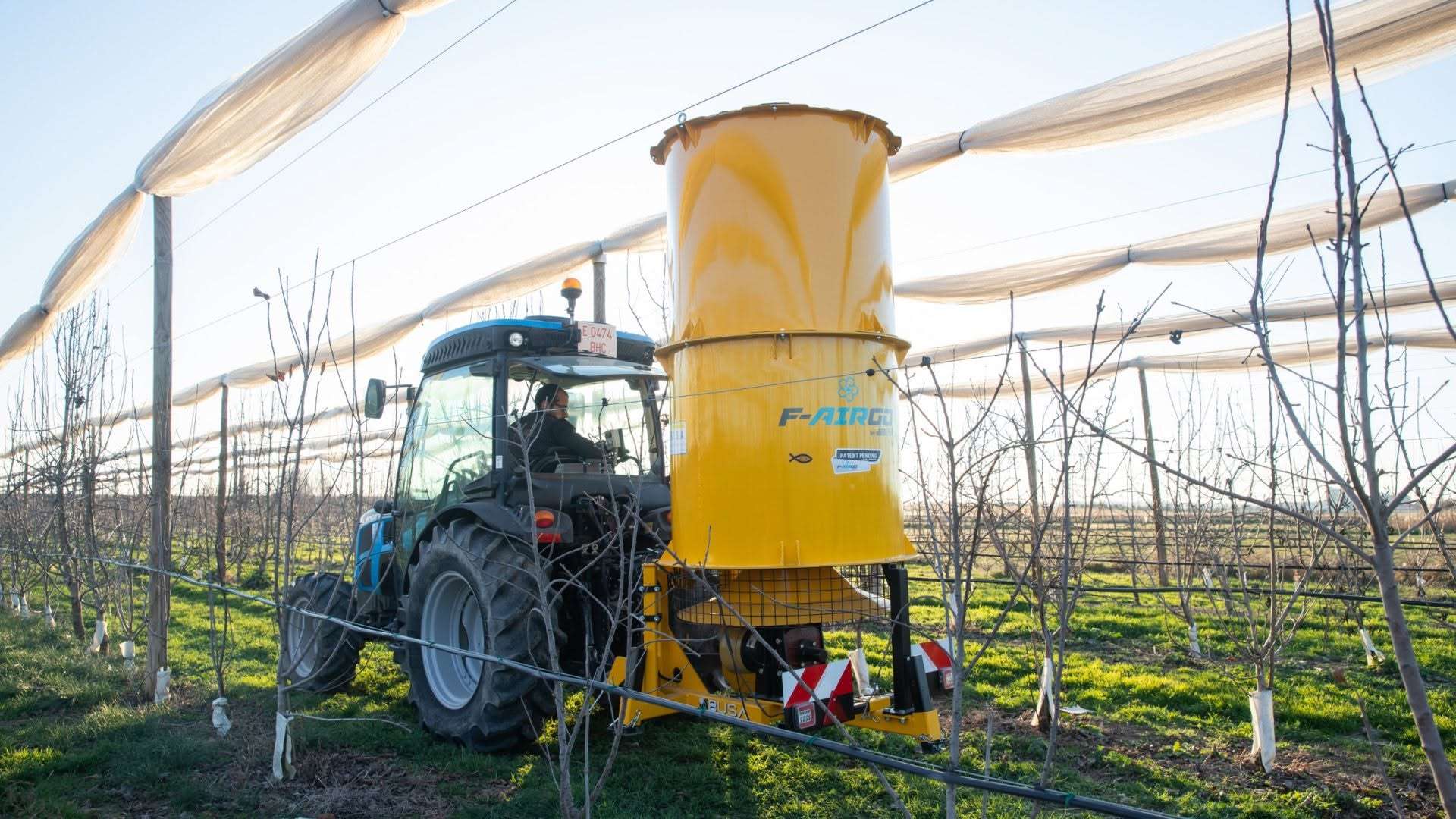
F-AirGo Blueberry
A version designed for blueberry plantations and shrub crops.
Its aim is for the airflow to pass properly through the plant stand in the lower and middle zones of the bushes as well, and to fit under lower hail nets too.

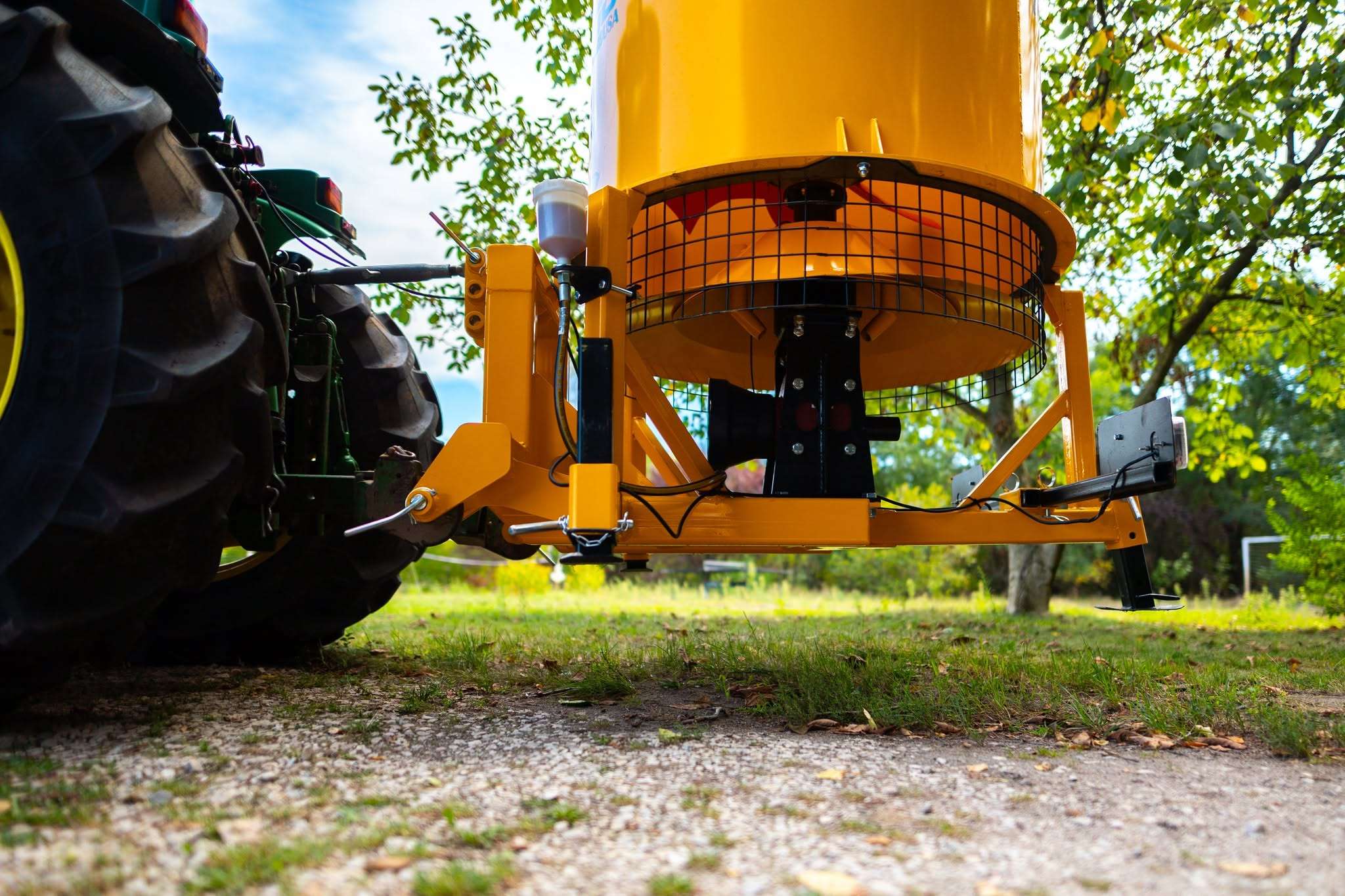
F-AirGo Fragola
For protecting strawberries, low-growing crops, and open-field horticultural crops.
The airflow is shaped to suit low-growing crops close to the ground, so it does not collide with plant parts.

References & Feedback
Farmers on their own frost protection: short video accounts from spring frost periods.
More experiences and user reviews
Frost Calculator
How much could you lose in one frosty night?
Set your plantation's details, and we'll show you the numbers.
worth approx. 13 500 000 Ft
This arc shows the estimated damage value for last year based on your data – the fuller the arc, the higher the estimated damage.
Request a personal quote
Your plantation's estimated damage value last year
0 Ft
2 pcs
recommended F-AirGo unit
0 Ft
estimated investment (gross)
Indicative estimate based on the data entered; not an offer and not a payback guarantee.
Thank you for your message! We will contact you shortly.
Frequently Asked Questions
Can the F-AirGo prevent all types of frost?
No. There is no frost protection system that guarantees complete protection in every weather situation. The effectiveness of the F-AirGo depends on the type and severity of the frost, on timing, on the characteristics of the plantation and on the route driven. In radiation frost, started in time, it can significantly reduce the damage; the result differs from plantation to plantation. Frost also shows up in fruit quality – reducing quality loss is also a goal of protection.
Does the machine heat the air?
The base version does not work by generating heat separately. It draws down the warmer air available higher up and then mixes it with the colder air near the ground. In other words: by sweeping away the cold, stable layer near the ground, the beneficial effect of the entire inversion air mass sinks into the fruiting zone as a gain. We also feed the heat of the 80–120 litres of diesel burned by the operating tractor back in as a gain.
Does it have to stand in one place?
No. The F-AirGo is a mobile system that travels continuously through the plantation while working. It can follow any plantation layout that we know.
How many hectares does one machine protect?
As a starting point we recommend 3.5–4.0 hectares of net area per machine. The area that can actually be protected depends on the shape of the plantation, the direction of the rows, the terrain and the severity of the frost. In theory, over one night the machine would cover about 400 hectares (50 m blowing width × 8 km/h travel speed × 10 hours), but for protection it has to reach the same area again and again, which is why we concentrate it on 3.5–4.0 hectares.
When should it be started?
Usually already at an air temperature between +2 and +4 °C, if further cooling is expected. The exact starting point must be determined based on the sensitivity of the plant, local measurement data and the grower's experience, e.g. 19:30.
Can it be used under hail nets?
Yes, if the height of the net system allows it.
What maintenance does it require?
Regular inspection of the PTO shaft, drive, bearings, fan, mountings, and protective elements is required. Maintenance instructions are provided in the machine's manual.